How B2B wholesale is defined in branded fashion
Wholesale is the side of the business that sells items to other businesses instead of to the person who will wear them. Wholesalers sell “goods for resale,” says the US Bureau of Labor Statistics: goods sold to other wholesalers or retailers, generally without being changed. They usually work from a warehouse or an office. The majority of designer wholesale and streetwear wholesale these days begins with B2B ecommerce, which Shopify describes as “the sale of products or services wholesale coach handbags from one business to another through digital channels”. A reseller is any company that buys goods to sell them on, whereas a retailer serves the end customer. You will also run into the term wholesale supplier, applied loosely to whoever sells to the shop, and trade supplier, which has no formal definition and in mostly UK usage refers to a seller that deals with businesses instead of the public.
Who sells what to whom
At the head of the chain there is usually a manufacturer, in BLS terms a business that transforms materials or components into new products. The brand that owns the trademark is often not the maker: according to Tapestry’s FY2026 annual report, Coach products are made by independent manufacturers, chiefly in Vietnam, Cambodia, the Philippines and India. Goods then flow through channels the brand chooses; at Tapestry, wholesale “primarily includes major department stores, specialty stores, and third-party digital partners,” about 12% of FY2026 net sales across its brands. No government licence makes a shop an authorized retailer; that is a contract status the brand grants. There is also a secondary market beside that channel: independent resellers who buy finished goods and resell them to shops and online sellers. The first-sale doctrine was put this way by a US appeals court in 1995: the right to control the distribution of a trademarked product “does not extend beyond the first sale” of it. The same court observed that a reseller who does more than stock and resell genuine goods, such as suggesting it is authorized, may still face a claim, and counterfeits are never covered.
How a typical wholesale order runs
In practice, almost every B2B wholesale deal moves through the same six stages. A deal starts with an inquiry, in which the buyer specifies styles and quantities and the seller states its minimum order, which Shopify defines as the minimum number of products an order should contain to be worth it. After that comes a price list of the goods on offer, or a line sheet, which shows the line of products a wholesale seller carries. So that the buyer can evaluate the goods before committing to volume, many sellers then offer samples. An invoice fixes the deal; for cross-border freight, customs use a commercial invoice to assess duties and taxes. Who clears customs is set by the shipping terms: under the Incoterms rule DAP, the buyer pays for import clearance, whereas under DDP the seller pays for it. Last of all comes the claims window: the period in which a buyer raises a problem with the delivery.
What shifted in 2025 and 2026
For anyone buying across a border, the biggest change is the end of the de minimis exemption for shipments valued at or under $800. A White House fact sheet states de minimis treatment for low-value packages from China and Hong Kong was suspended effective May 2, 2025, and Executive Order 14324 widened the suspension to all countries from August 29, 2025. The same fact sheet notes the One Big Beautiful Bill Act permanently repeals the exemption’s statutory basis worldwide effective July 1, 2027. That IEEPA does not authorize the President to impose tariffs was the Supreme Court’s holding in Learning Resources v. Trump on February 20, 2026. Then, CBP relied on its own authority to keep the $800 exemption suspended for non-postal shipments, in an interim final rule published June 24, 2026, with postal shipments covered by a separate rule; because of this, shipments in scope now need a formal or informal entry. A 10% Section 122 surcharge ran from February 24, 2026, until it expired on July 24, 2026. Since that expiry, imports from sixty economies face Section 301 “forced labor” duties of 10 to 12.5 percent, with exemptions: 12.5% for a group including China, Hong Kong, Vietnam and the Philippines, and 10% for a group including India and Cambodia. A challenge to those duties is being heard at the Court of International Trade, which heard argument on September 30, 2026, and had not ruled as of November 4. As of November 2026, base HTS rates apply underneath: 9% for non-reptile leather handbags valued over $20 each and 16.5% for knitted cotton sweatshirts under 6110.20.20, though a given hoodie’s classification depends on the garment. All of these rates can change, and nothing here is customs advice; a licensed customs broker should confirm the duty on any specific order.
Four brands and four wholesale categories
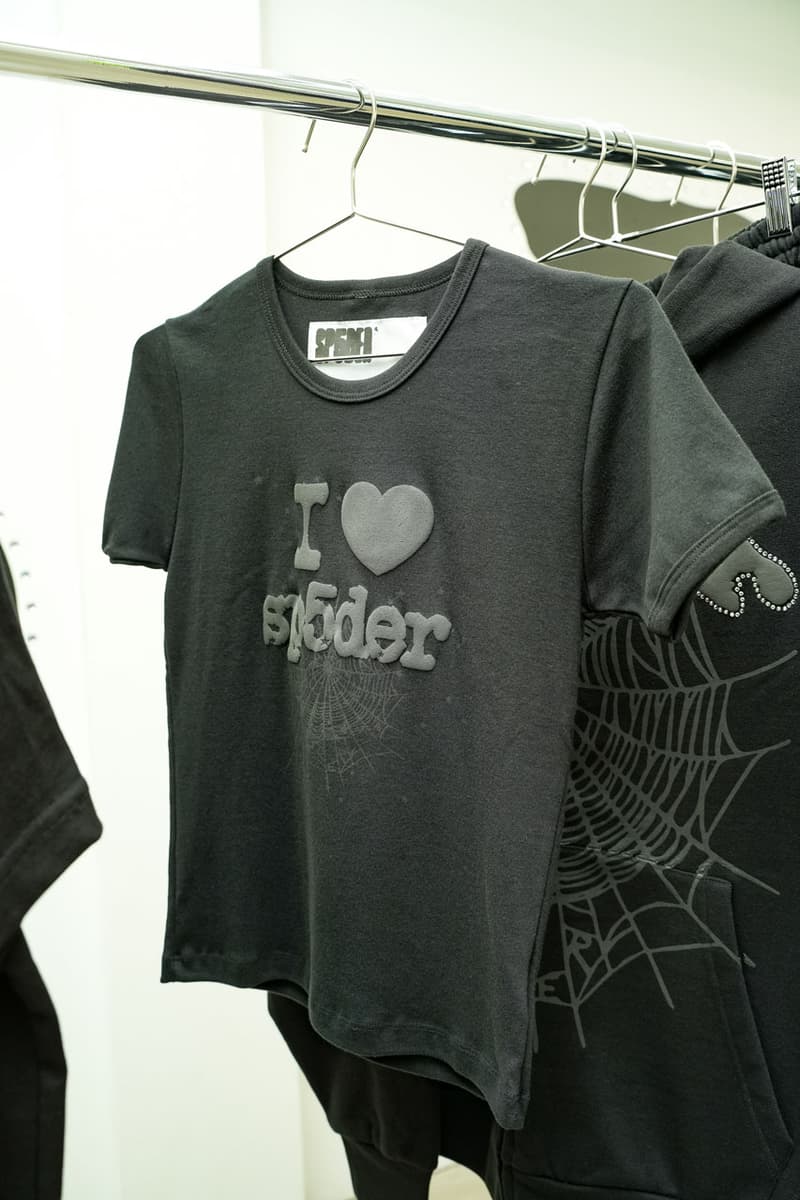
The most familiar category is Coach wholesale. In Tapestry’s words, Coach is “Inspired by the vision of Expressive Luxury,” and the brand sells through its own stores and website and through authorized department and specialty stores. Requests to authenticate products or identify authorized distributors go unanswered, Coach says. Marc Jacobs wholesale changed hands this year: since September 1, 2026, the brand has been owned by WHP Global and G-III Apparel Group rather than LVMH, with G-III operating wholesale, retail and e-commerce under a licence running to 2041. At the center of Tory Burch wholesale sits a privately held company that calls itself “a global luxury brand,” and its handbag families include Ella, Fleming, Perry and Romy. Tory Burch’s US counterfeit page says authentic products are sold in its stores, on its website and at authorized retailers, though it names no such retailer. Sp5der wholesale works another way: the brand publishes no wholesale program, distributor list or stockist list. King Spider LLC owns the brand’s trademarks, press reports describe the brand as the clothing line of rapper Young Thug, and its terms say it may limit or prohibit orders that appear to come from dealers, resellers or distributors. In November 2026 most full-price pullover hoodies on its site were listed at $200, a price subject to change, and its hoodies and sweatpants are 13 oz, 100% cotton fleece.
The order flow at the four stores
This network’s four stores share one set of terms, and the six stages above map directly onto them. Each store works as an independent reseller, buying finished goods, holding them in its own warehouse and selling them in bulk to stores and resellers. All four stores are independent: they are not affiliated with, endorsed by or authorized by Sp5der (King Spider LLC), Coach, Tory Burch or Marc Jacobs. None is the brand, the brand’s distributor or an authorized dealer, and none manufactures anything, drop-ships or takes made-to-order work. The list below shows what each store sells in bulk and the first-order minimum.
- Sp5der Wholesale — sp5derwholesale.com — Sp5der hoodies, sweatpants and tracksuits — first order from $1,700
- Coach Wholesale — coach-wholesale.com — Coach bags, handbags, accessories and wallets — first orders from $1,700
- Tory Burch Wholesale — toryburchwholesale.com — handbags by Tory Burch — first order from $2,000
- Marc Jacobs Wholesale — marcjacobswholesale.com — Marc Jacobs bags (The Tote Bag, The Snapshot, The Sack Bag and more) — first orders from $2,000
Every quote is written from units actually in the warehouse that day. Tory Burch Wholesale sells by the line, one style in one color at a time, and sends a line sheet on request, while the other three send a price list.
| Order step | What takes place | What the buyer gets |
|---|---|---|
| Inquiry | The buyer writes in with styles and quantities | A reply from a person within 8 to 12 hours |
| Price list or line sheet | The store writes a quote from units in its warehouse that day | A price list, or a line sheet from Tory Burch Wholesale |
| Pre-payment check | The buyer asks to see the exact units | Dated photos, or a paid sample of 1 or 2 units that is credited to the first order |
| The invoice | Goods and insured shipping go on one bill | A single invoice, payable by PayPal or bank card |
| Packing and shipment | Packing takes 4 to 7 days, then the order ships insured with FedEx, UPS or DHL | A tracking number on dispatch day, plus a commercial invoice and a packing list |
| The claims stage | The buyer checks the delivery against the paperwork | 30 days after delivery to report a claim |
The useful question is what a buyer can see before money moves, given that the stores describe their goods as authentic finished goods held in stock. Dated photos and a paid sample let a buyer judge real units rather than catalog images.